5 Ways to Host a Tiny Dorm Kitchen Potluck Without a Real Kitchen
Quick Answer: The trick to a dorm kitchen potluck is assigning each guest a no-cook or one-step dish (so you’re not fighting over a single burner), setting a firm 90-minute window so the shared space isn’t monopolized, and using the hallway or a common room as overflow seating since the kitchen itself is rarely big enough for more than four people standing.
A handful of small, deliberate choices turn a cramped shared kitchen into a genuinely fun low-key gathering spot.

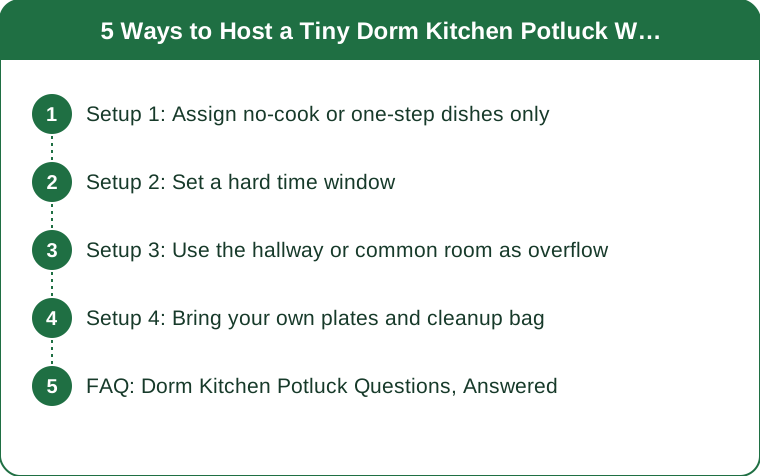
Setup 1: Assign no-cook or one-step dishes only
Since most dorm kitchens have one or two burners shared among an entire floor, asking each guest to bring something that needs zero or minimal cooking (a dip, a pre-made salad, cut fruit, chips) avoids the actual bottleneck: everyone showing up wanting the same burner at the same time.
Setup 2: Set a hard time window
A clear start and end time (90 minutes tends to work well) respects that the kitchen is shared space other residents need — posting the window on the floor group chat in advance also gives anyone who needs the kitchen a heads-up rather than an unpleasant surprise.

Setup 3: Use the hallway or common room as overflow
Most dorm kitchens genuinely can’t fit more than four people comfortably standing — treating the kitchen counter as the serving station and moving the actual eating and socializing to a nearby common room or even the hallway with a folding table keeps the gathering from feeling cramped.
Setup 4: Bring your own plates and cleanup bag
Shared dorm kitchens rarely have enough dishware for a group, and dishes left in a shared sink is one of the fastest ways to generate floor-mate resentment — a stack of paper plates and a designated trash bag that leaves with you when the potluck ends avoids that entirely.
FAQ: Dorm Kitchen Potluck Questions, Answered
Do I need to ask an RA before hosting something like this?
Most dorms are fine with a small, contained gathering in a shared kitchen, but checking your specific building’s guest and shared-space policy first avoids any surprise conflict, especially for anything beyond a handful of people.
What if another resident needs the kitchen while the potluck is happening?
Building in flexibility (pausing to let someone through, or wrapping up early if asked) keeps the goodwill that makes future shared-kitchen gatherings possible — treating the space as genuinely shared, not reserved, matters more than finishing on schedule.
How many people can a typical dorm kitchen potluck realistically handle?
Six to eight people tends to be the practical ceiling for a single-burner shared kitchen setup with overflow seating nearby; beyond that, the space usually can’t keep up.
TL;DR:
- No-cook or one-step dishes avoid the single-burner bottleneck entirely
- A firm, posted time window respects that the kitchen is shared space
- Overflow seating in a hallway or common room solves the space problem
- Bringing your own plates and cleanup bag prevents dish pile-up conflicts
A dorm kitchen potluck works when the plan accounts for the space’s real limits instead of fighting them.
Keep Reading
This article is for general informational purposes only and is not medical advice. Always consult a qualified health professional for guidance specific to you.