5 Dorm Dinners for the First Cold Week of the Semester
Quick Answer: Five warm dinners, each buildable with a microwave or a kettle, each under roughly $3-4 per serving, and each hitting a real protein target rather than being warm carbohydrate. The three items that unlock all of them: a microwave-safe bowl with a lid, a can opener, and a bag of frozen vegetables in the shared freezer. Everything else is shelf-stable.
The first cold week of the semester is when eating habits usually fall apart - it is dark by dinner, the dining hall is a walk away, and cold food stops being appealing. These five are the ones that actually get made.

Dinner 1: The upgraded instant noodle bowl
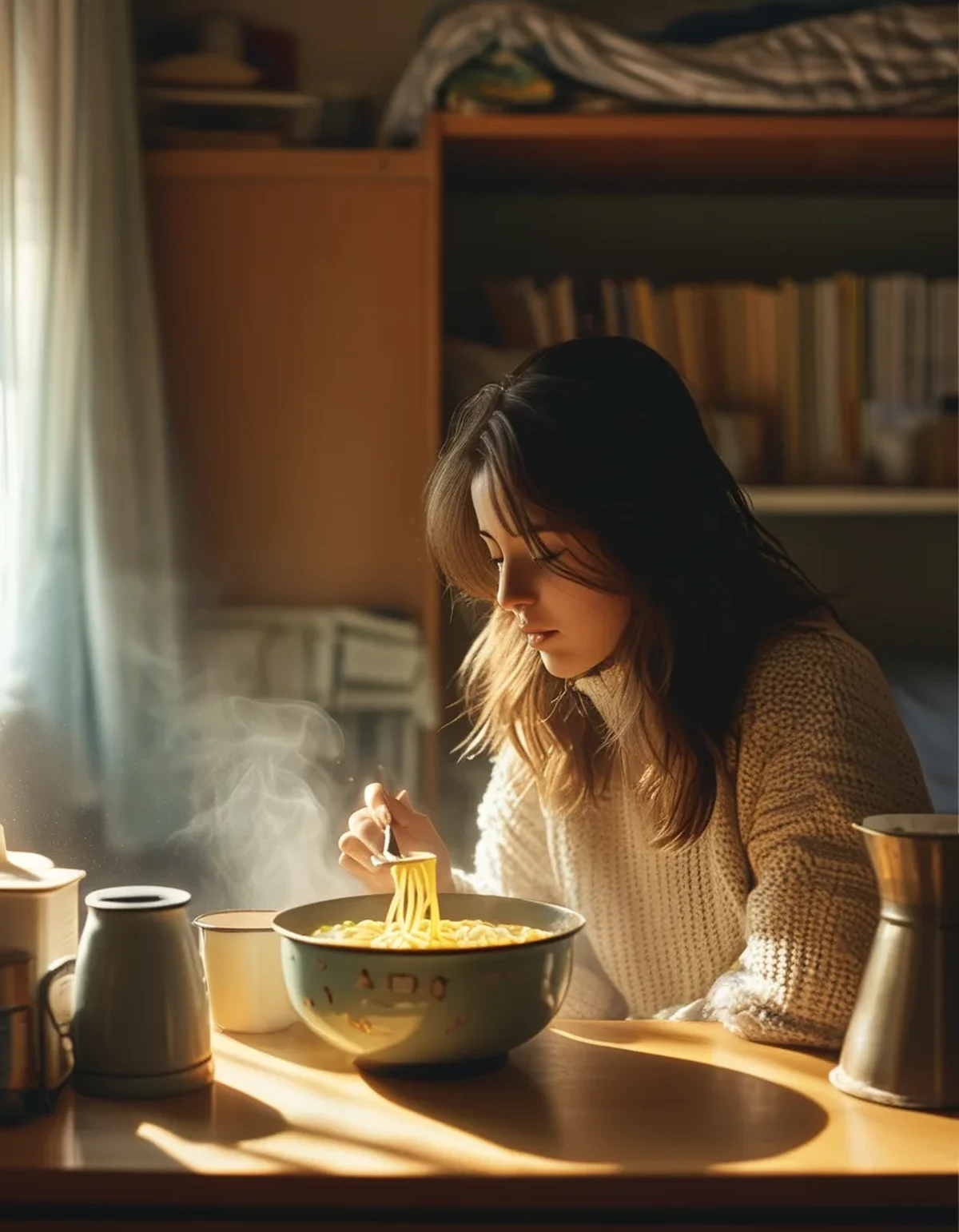
Instant noodles are the dorm default and they are a nutritional dead end as sold - high sodium, almost no protein, and hunger returns in ninety minutes. Three additions fix that entirely.
Build it: cook the noodles in a microwave-safe bowl with about half the seasoning packet - the full packet is where nearly all the sodium lives. Then add:
- A protein. A soft-boiled or microwaved egg, a handful of frozen edamame, a pouch of tuna, or leftover rotisserie chicken from a shared fridge. This is the single most important addition and it changes how long the meal holds you.
- A vegetable. A handful of frozen spinach, peas, or mixed vegetables stirred in during the last minute of cooking. Frozen is cheaper than fresh, does not go bad in a dorm, and is nutritionally comparable.
- A flavor finisher. A spoon of chili crisp, a squeeze of lime, sesame oil, or a spoon of peanut butter for a satay-style broth.
Cost: roughly $1.50-2.50 per bowl depending on the protein.
Why it works: it uses the one thing every dorm has, it takes four minutes, and adding an egg and frozen vegetables roughly doubles the satiety of the same base. The peanut butter version in particular tastes like something you chose rather than something you settled for.
Dinner 2: The microwave rice bowl
The most flexible template on this list, and the one that scales best when you have twenty minutes rather than five.
Build it: start with a 90-second microwave rice pouch or a batch of rice cooked earlier in a rice cooker if your dorm allows one. Then layer:
- Protein: black beans or chickpeas from a can (drained and rinsed), a pouch of tuna or salmon, a microwaved egg, or pre-cooked chicken.
- Vegetable: frozen mixed vegetables microwaved with a splash of water, or fresh spinach wilted in the residual heat.
- Sauce: this is what makes it a meal rather than components in a bowl. Soy sauce and sesame oil, a spoon of salsa and a scoop of Greek yogurt for a burrito-bowl version, or peanut sauce.
- Crunch: crushed tortilla chips, roasted peanuts, or crispy fried onions.
Cost: about $2.50-3.50 per bowl.
The efficiency move: open a can of beans and use it across three days. Store the remainder in a sealed container in the fridge, not in the open can. This is the cheapest complete protein available in a dorm setting and it needs no cooking at all.
A warming variation for genuinely cold nights: add hot broth from a bouillon cube and turn the same components into a soup.
Dinner 3: Kettle-only couscous or ramen-style soup
For rooms with no microwave, or for the nights you do not want to walk to the shared kitchen.
The core trick: couscous, instant oats, thin rice noodles, and instant soup bases all rehydrate in boiling water alone. A kettle is a complete cooking appliance if you build around that.
Build it: put 1/2 cup couscous in a bowl or a wide-mouth thermos, add a bouillon cube and any quick-cooking additions - frozen peas, dried herbs, a handful of spinach. Pour over 3/4 cup boiling water, cover with a plate, and leave 5 minutes. Fluff with a fork.
Then add protein: a pouch of tuna, a can of chickpeas, or cheese stirred through while hot.
Finish with fat and acid: olive oil and a squeeze of lemon, which turns plain couscous into something you would eat on purpose.
Cost: about $1.50-2.00 per serving.
Scaling this up: the same technique works with thin rice vermicelli for a pho-style bowl, or with instant mashed potato as a base for a bowl topped with beans and cheese. The kettle is genuinely underrated as a dorm appliance, and it is allowed in essentially every residence hall where hot plates are not.
Dinner 4: The mug-based egg dish
Eggs are the cheapest quality protein available and they cook in a microwave far better than their reputation suggests.
Build it: crack two eggs into a large mug - larger than you think, because they rise. Add a splash of milk, salt, pepper, and any of:
- Chopped spinach and feta
- Salsa and cheese
- Frozen peppers and onions, microwaved for 30 seconds first
- Leftover rice, which turns it into a fried-rice-adjacent thing
Microwave in 30-second bursts, stirring between each. Total time is usually 60-90 seconds. The stirring is the whole technique - continuous cooking produces a rubbery puck; stirring produces soft curds.
Serve with: toast if you have a toaster, or over instant rice, or on its own with hot sauce.
Cost: roughly $1.00-1.50.
Why this belongs on the list: it takes under three minutes, it is around 12-14 grams of protein, and it works at any hour, which matters when your schedule puts dinner at 10 pm after a lab. It is also the one meal here that works equally well as breakfast, which means a carton of eggs never goes to waste.
Dinner 5: The no-cook assembly plate
Some nights the answer is not cooking anything at all, and having a designed version of that beats defaulting to chips.
Build it: pick one from each row.
- Protein: hummus, a pouch of tuna, deli turkey, cottage cheese, a hard-boiled egg made earlier, or a handful of roasted chickpeas.
- Carbohydrate: whole grain crackers, a tortilla, pita, or a bread roll.
- Vegetable: baby carrots, cherry tomatoes, cucumber, or bell pepper strips - all of which keep well in a mini fridge and need no preparation.
- Fat: cheese, nuts, avocado, or olive oil.
- Something sweet: fruit, or a square of dark chocolate.
Cost: about $2.50-3.50.
Why it counts as a real dinner: it hits protein, fiber, and fat, and it takes ninety seconds. The reason most no-cook dorm dinners fail nutritionally is that they are all carbohydrate - crackers, chips, cereal. Adding a deliberate protein and a vegetable to the same amount of effort changes the whole picture.
The mini fridge note: keep the vegetables at eye level in the fridge and the snacks out of sight. This sounds like a trick and it demonstrably changes what gets eaten in a small shared space.
FAQ: Dorm Dinner Questions, Answered
What equipment is genuinely worth buying?
A large microwave-safe bowl with a vented lid, a kettle if permitted, a can opener, a decent knife and small cutting board, and a few sealed storage containers. That covers everything on this list. Skip single-purpose gadgets.
How do I keep food from spoiling in a mini fridge?
Mini fridges run warmer and less evenly than full-size ones, especially near the door. Keep dairy and protein at the back, use a small thermometer to confirm it is at or below 40F, and do not overfill it - airflow is what keeps it cold.
How do I do this on a genuinely tight budget?
Buy the shelf-stable base ingredients in bulk - rice, beans, oats, pasta, canned tuna - and treat fresh items as the small part of the budget. Frozen vegetables are the best value in the store for dorm cooking because nothing is wasted.
Is it worth cooking in the shared kitchen instead?
If you have access, one 45-minute cooking session on a Sunday producing four portions changes your whole week and costs less per meal than anything here. The in-room options are for the other five nights.
TL;DR:
- Five warm dinners, all doable with a microwave or kettle, all around $1.50-3.50 per serving.
- The upgrade that matters most: add a protein and a frozen vegetable to whatever base you already eat.
- A kettle plus couscous or rice noodles is a complete cooking setup for rooms with no microwave.
- Keep beans, tuna pouches, eggs, and frozen vegetables stocked and you can build a real dinner in four minutes.
The first cold week is when the semester’s eating habits get set. Five workable dinners in rotation is enough to keep the rest of it from becoming a granola bar.
Keep Reading
This article is for general informational purposes only and is not medical advice. Always consult a qualified health professional for guidance specific to you.