Five Dorm Meals From a Single Appliance
Quick Answer: You need one appliance and about four staple ingredients per meal. A microwave handles grains, eggs and steamed vegetables. A kettle handles anything that rehydrates - couscous, instant noodles, oats. One hob ring handles everything else if you accept one-pot cooking. The technique that makes each of these work is not a recipe - it is knowing the ratio and the resting time.
Most student cooking advice assumes an oven, four pans and a cupboard of spices you have not bought.
These five work with one appliance and a small shelf.
This is general information, not medical or nutritional advice.

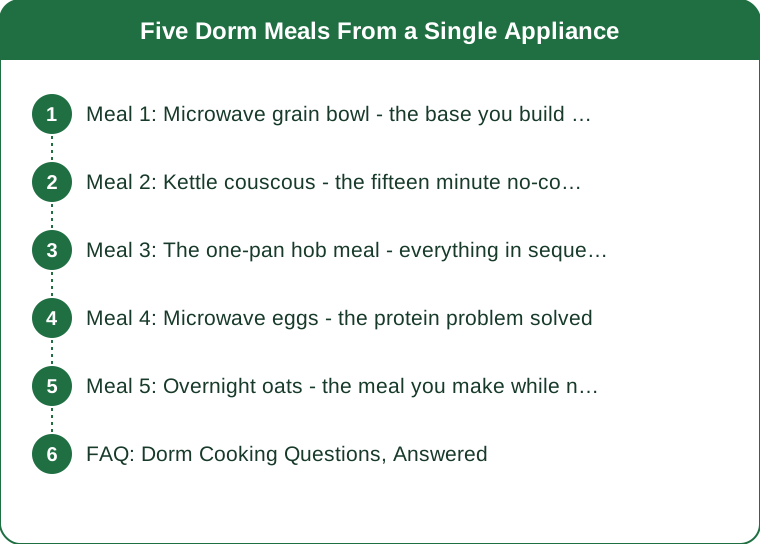
Meal 1: Microwave grain bowl - the base you build everything on
The technique: rice, quinoa or couscous cooked in a large microwave-safe bowl with the correct water ratio and, crucially, a resting period afterward.
Ratios that work in a microwave: rice needs roughly twice its volume in water; quinoa the same; couscous needs equal volume and no cooking at all. The most common failure is too little water and too much power.
Method for rice: combine rice and water in a bowl at least three times the volume of the liquid - this matters, because it boils over otherwise. Microwave on full for 5 minutes, then on half power for 10-12 minutes, then leave it covered for 5 minutes without opening. The resting period is where the grain finishes cooking, and skipping it is why microwave rice has a reputation for being poor.
Building the bowl: grain, a protein, something fresh, something with fat, and an acid. Tinned chickpeas, a handful of spinach wilted in the residual heat, a spoonful of yoghurt or tahini, and a squeeze of lemon makes a genuinely good meal in about fifteen minutes.
Why this is the foundation: once you can cook a grain reliably, most other meals are variations on top of it. Cook a double portion and the second one becomes tomorrow’s lunch cold, which is the single most efficient thing a student kitchen can do.
Cost note: dried grains are among the cheapest calories available, and a large bag lasts weeks. The tinned protein - chickpeas, beans, tuna - is where most of the cost sits, and buying those in multipacks makes a real difference over a term.
Meal 2: Kettle couscous - the fifteen minute no-cook meal
The technique: couscous does not need cooking. It needs hot water and time.
The ratio: equal volumes of couscous and boiling water, covered, for five minutes. Then fluff with a fork. That is the entire process, and it is genuinely reliable.
What makes it a meal rather than a side: flavour the water, not the couscous. A stock cube dissolved in the boiling water transforms it - plain couscous made with plain water is bland, and that is why people dismiss it.
The assembly: stir in a tin of drained chickpeas or tuna, whatever vegetable you have chopped small, olive oil, and lemon. Anything raw and crunchy - cucumber, pepper, spring onion - adds the texture that couscous lacks.
Why this works for a dorm specifically: it requires only boiling water, which means it works with a kettle, in a shared kitchen with a queue, or in a room with no cooking facilities at all. It also holds well - made in the morning, it is a good lunch by midday.
A variation worth knowing: bulgur wheat works the same way and has more texture and fibre. It needs slightly longer - around 15-20 minutes covered - but the method is identical.
On instant noodles as the other kettle option: they work, and they are nutritionally thin on their own. Adding an egg (drop it in with the hot water and cover), frozen peas, and a handful of spinach turns a packet into an actual meal for very little extra cost or effort.
Meal 3: The one-pan hob meal - everything in sequence
The technique: if you have one ring and one pan, cook in order of how long things take, adding as you go. Nothing needs to come out.
The sequence that works for almost anything:
- Onion or the hardest vegetable first, in oil, 5 minutes
- Garlic and spices, 30 seconds - any longer and garlic burns
- Protein, until cooked through
- Tinned tomatoes or stock, and simmer
- Anything quick - spinach, peas, herbs - in the last two minutes
A concrete version: onion, garlic, a tin of chopped tomatoes, a tin of chickpeas, cumin and paprika, simmered 15 minutes, spinach stirred in at the end. Serve with bread or over the microwave grain from meal one. Total cost per portion is very low and it makes two meals.
Why the sequence matters more than the recipe: once you understand that hard things go in first and delicate things go in last, you can cook almost anything with whatever is in the cupboard without needing a recipe at all.
The one-pan pasta variation: cook pasta in just enough water that it is absorbed rather than drained - roughly twice the pasta volume, added gradually. The starch stays in the pan and thickens into a sauce, which is why this works better than draining. Add tomatoes, tuna, or whatever is available in the last few minutes.
What most student cooking gets wrong: the pan is not hot enough and it is overcrowded. Both produce steamed grey food instead of browned food, and browning is where most of the flavour comes from.

Meal 4: Microwave eggs - the protein problem solved
The technique: eggs cook extremely fast in a microwave and go rubbery just as fast. Short bursts and stirring are the whole method.
Scrambled: beat two eggs with a splash of milk in a mug or bowl. Microwave 30 seconds, stir, 20 seconds, stir, then 10-15 second bursts until just set. Take them out slightly underdone - residual heat finishes them, and this is the difference between good and rubbery.
Poached: crack an egg into a mug of water deep enough to cover it, pierce the yolk with a fork - this is not optional, they burst otherwise - and microwave for around 45-60 seconds.
Why eggs matter in a dorm kitchen: they are among the cheapest complete protein sources available, they store for weeks, and they require no preparation. The most common gap in student diets is protein, and eggs address it more cheaply than anything else.
Building a meal around them: eggs on toast with something green, an egg stirred into instant noodles, or eggs over the microwave grain bowl. Two eggs is roughly 12-13g of protein, which is a meaningful contribution toward a day’s needs.
A safety note that is worth stating: never microwave an egg in its shell. Pressure builds inside and it will explode, sometimes after you take it out. Always pierce the yolk of a whole egg before microwaving.
On frozen vegetables as the companion: frozen peas, spinach and mixed vegetables microwave in a few minutes, cost very little, and are nutritionally comparable to fresh. They are the single most practical way to get vegetables into a dorm diet, because they do not go off before you use them.
Meal 5: Overnight oats - the meal you make while not cooking
The technique: oats absorb liquid cold, given enough time. No heat required at any stage.
The ratio: roughly equal volumes of oats and liquid, adjusted to preference - more liquid for a looser texture. Combine in a jar or container, refrigerate overnight, eat cold or briefly warmed.
What to add and why:
- Yoghurt for protein and a thicker texture
- Milk or fortified plant milk - fortified matters if you are avoiding dairy, since calcium is one of the easier things to fall short on
- Frozen berries, which thaw overnight and cost far less than fresh
- Nut butter or seeds for fat and staying power
Why this solves a specific student problem: breakfast is the meal most commonly skipped, usually because it competes with sleep. Overnight oats move the effort to the night before, when there is time. Three jars made on Sunday covers half the week.
The protein point matters here too. Oats alone are mostly carbohydrate, and adding yoghurt, milk and seeds is what makes it hold until lunch rather than leaving you hungry at 10:30am.
A cost comparison worth knowing: a large bag of porridge oats costs very little and provides a great many servings. It is among the cheapest breakfasts available, and it compares favourably to any cereal on both cost and satiety.
Storage note: made oats keep in the fridge for around three days. Making a week’s worth at once is the standard mistake - by day five the texture has gone.
FAQ: Dorm Cooking Questions, Answered
What are the four things worth buying first?
A large microwave-safe bowl with a lid, one decent frying pan or saucepan if you have a hob, a sharp knife, and a chopping board. Everything else can wait. The bowl and the knife do the most work.
How do I get enough protein without a proper kitchen?
Eggs, tinned fish, tinned beans and chickpeas, Greek yoghurt, and milk. None need cooking facilities beyond a microwave, all store well, and all are cheap. Protein is the most common gap in student diets and the easiest to fix.
Is frozen as good as fresh?
For vegetables, essentially yes - frozen is picked and frozen quickly and compares well nutritionally. It also does not go off, which in a dorm context makes it better in practice, because unused fresh vegetables are wasted money.
How long does prepped food keep?
Three to four days refrigerated is the general guidance for cooked food. Prepping three days at a time is more realistic than five, and it is the point where most meal prep quietly goes wrong.
How do I deal with a shared kitchen?
Cook things that need one appliance for a short time, prep at off-peak hours, and keep your equipment minimal so it stores in your room. The kettle and microwave meals here exist partly because they sidestep the queue for the hob.
TL;DR:
- Five meals, one appliance each: microwave grain bowl, kettle couscous, one-pan hob meal, microwave eggs, overnight oats
- Ratios and resting periods matter more than recipes - microwave rice needs 5 minutes covered afterward
- Flavour the water, not the food: a stock cube transforms couscous
- One-pan cooking is about sequence - hardest ingredient first, delicate things last
- Eggs are the cheapest complete protein available; always pierce the yolk before microwaving
- Frozen vegetables are the most practical way to actually eat vegetables in a dorm
Learn four ratios and you will not need a recipe again.
Keep Reading
This article is for general informational purposes only and is not medical advice. Always consult a qualified health professional for guidance specific to you.