Microwave Meals That Are Actually Good: The Dorm Chef's Real Repertoire
The microwave got typecast as the ramen machine — while it steams, poaches and bakes-ish well enough to feed a semester properly. The dorm chef’s guide: the technique that changes results, the five-meal repertoire and the mini-fridge system behind it.

The Technique Layer
Why microwave food disappoints (and the fixes): the power-level secret (100% power is the appliance’s bluntest setting — 50-70% power cooks evenly what full power rubberizes; the eggs-and-fish tier especially; the button nobody presses is the technique), the standing-time rule (food keeps cooking after the beep — the minute of patience that finishes centers without nuking edges), the moisture management (the damp paper towel over reheats, the vented cover over steams — steam is the microwave’s actual talent; use it on purpose), and the stir-and-rotate honesty (microwaves heat unevenly by physics — the halfway stir is half the quality gap between sad and good).
The Five-Meal Repertoire
The real dishes: the loaded baked potato (8-10 minutes, pierced, then topped from the fridge kit — the complete meal the microwave does genuinely well), the egg bowl (eggs scrambled at 50% in a mug with cheese and spinach — 90 seconds, stirred twice; the protein breakfast that beats the dining hall’s queue), the steamed dumpling-and-vegetable plate (the frozen dumpling tier plus a bowl of broccoli steamed in its own bag-or-bowl — the ten-minute dinner with actual vegetables), the upgraded ramen (the packet plus an egg poached in the broth, frozen spinach and a spoon of peanut butter or miso — the ramen transformed, not abandoned; the noodle inheritance honored), and the mug-cake diplomacy (the single-serve dessert that ends the group-size temptation math — 90 seconds, portion built in).
The Mini-Fridge Mise en Place
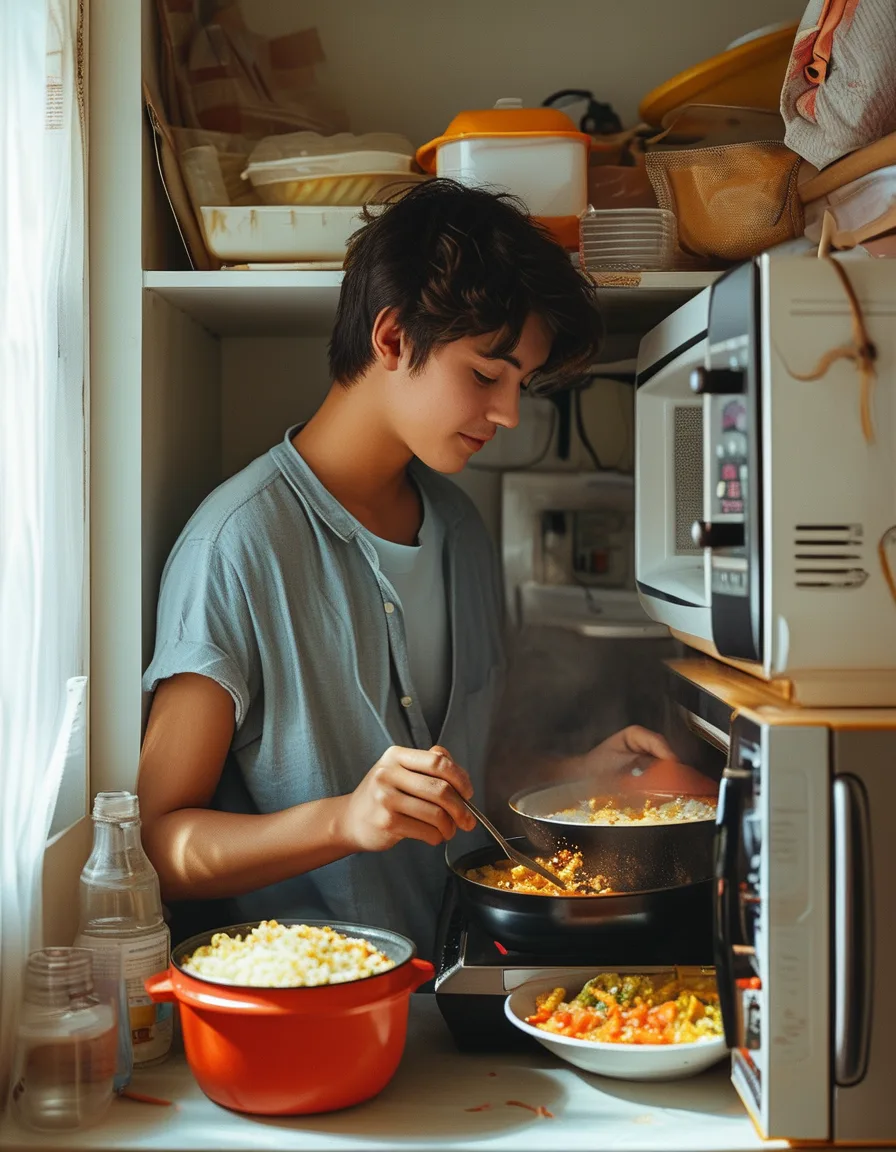
The system behind the meals: the topping kit (shredded cheese, Greek yogurt-as-sour-cream, the salsa jar, pre-cooked bacon bits — the loaded-potato and egg-bowl infrastructure in one door shelf), the frozen half (frozen vegetables, dumplings and the batch-cooked rice portions — the freezer compartment is the dorm’s pantry; frozen vegetables steam better in microwaves than fresh ones wilt in mini-fridges), the protein anchors (eggs, the tuna pouches, the rotisserie-chicken portions from the weekend grocery run), and the flavor shelf (soy sauce, hot sauce, the everything-bagel seasoning tier — the difference between fed and dinner is three bottles).
The Dorm-Legal Logistics
The practical fine print: the smell diplomacy (fish and broccoli are hallway-diplomacy decisions — the vent, the door and the timing courtesy; the popcorn-burning incident is a fire-alarm education everyone gets once), the dish minimalism (one big mug, one bowl, one plate, one set of cutlery — washable in a bathroom sink; the dorm kitchen is a dish-count discipline), the food-safety basics (the mini-fridge thermometer check, the leftovers-48-hours rule, and the reheat-once law — the shared-bathroom semester doesn’t need food poisoning), and the budget receipt (the repertoire above runs a fraction of the dining-dollar and delivery math — the microwave semester funds its own textbooks). The ramen machine had range all along — power level 6 was the unlock.
Half power for proteins, steam on purpose, topping kit in the door, one mug does everything. The microwave cooks real food at dorm scale — technique first, repertoire follows.
Keep Reading
This article is for general informational purposes only and is not medical advice. Always consult a qualified health professional for guidance specific to you.