The Mini-Fridge Habit That Spoils Your Food Faster Than You Think
Quick Answer: Mini-fridges spoil food faster mainly because the door is the warmest zone and people store perishables there — plus the whole unit runs warmer than a full-size fridge unless the thermostat is manually checked. Move dairy and meat to the back, and check the actual temperature with a thermometer.
Your milk goes off two days before the date. The yogurt sours fast. You assumed it was a cheap-fridge problem, and it partly is — but the bigger issue is probably where things sit inside it, not the fridge itself.
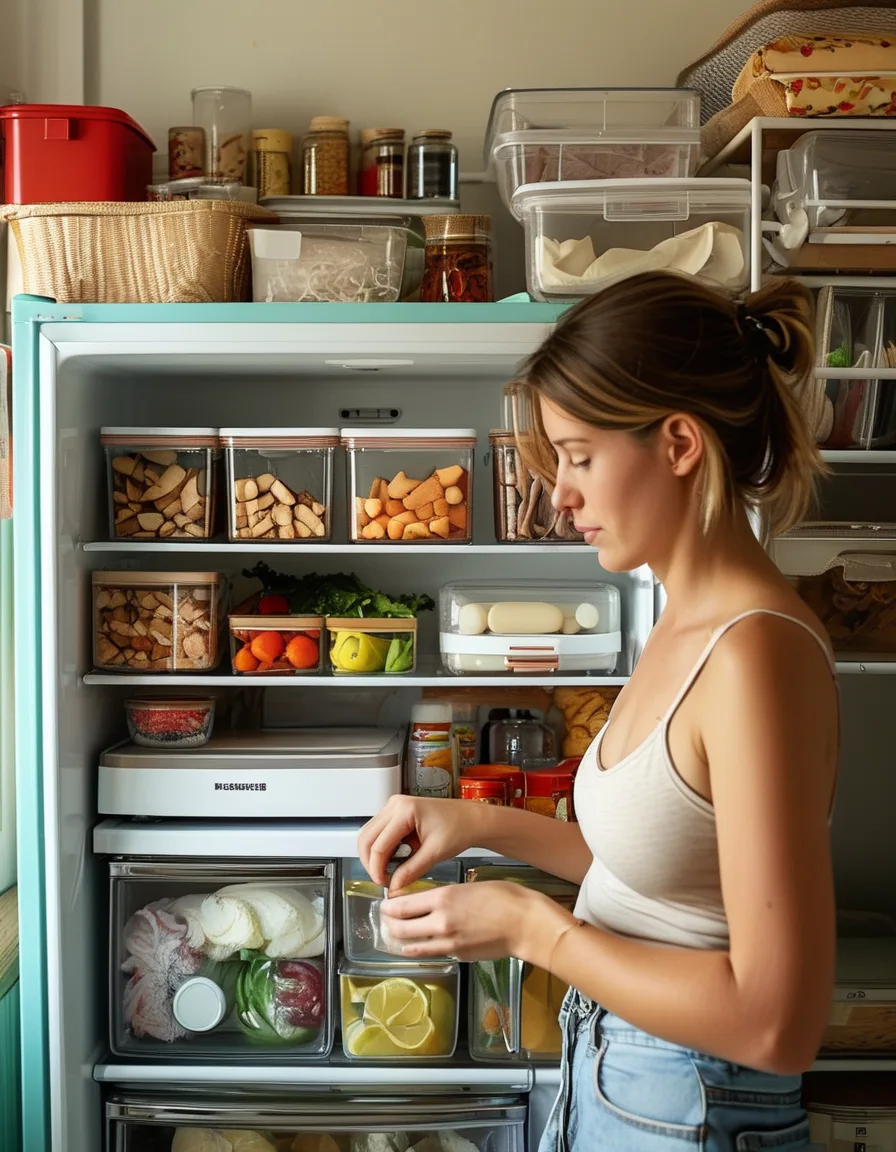
Why does a mini-fridge run warmer than a regular one?
Because most dorm mini-fridges have weaker insulation and a less precise thermostat, and they’re opened constantly in a warm room. The door shelves — where most people instinctively put milk and condiments — are the warmest part of any fridge, mini or full-size, because they’re closest to outside air every time the door opens.
In a mini-fridge this effect is amplified: the whole interior is smaller, so the temperature swing from opening the door affects a much larger share of the total space.
Where should things actually go in a mini-fridge?
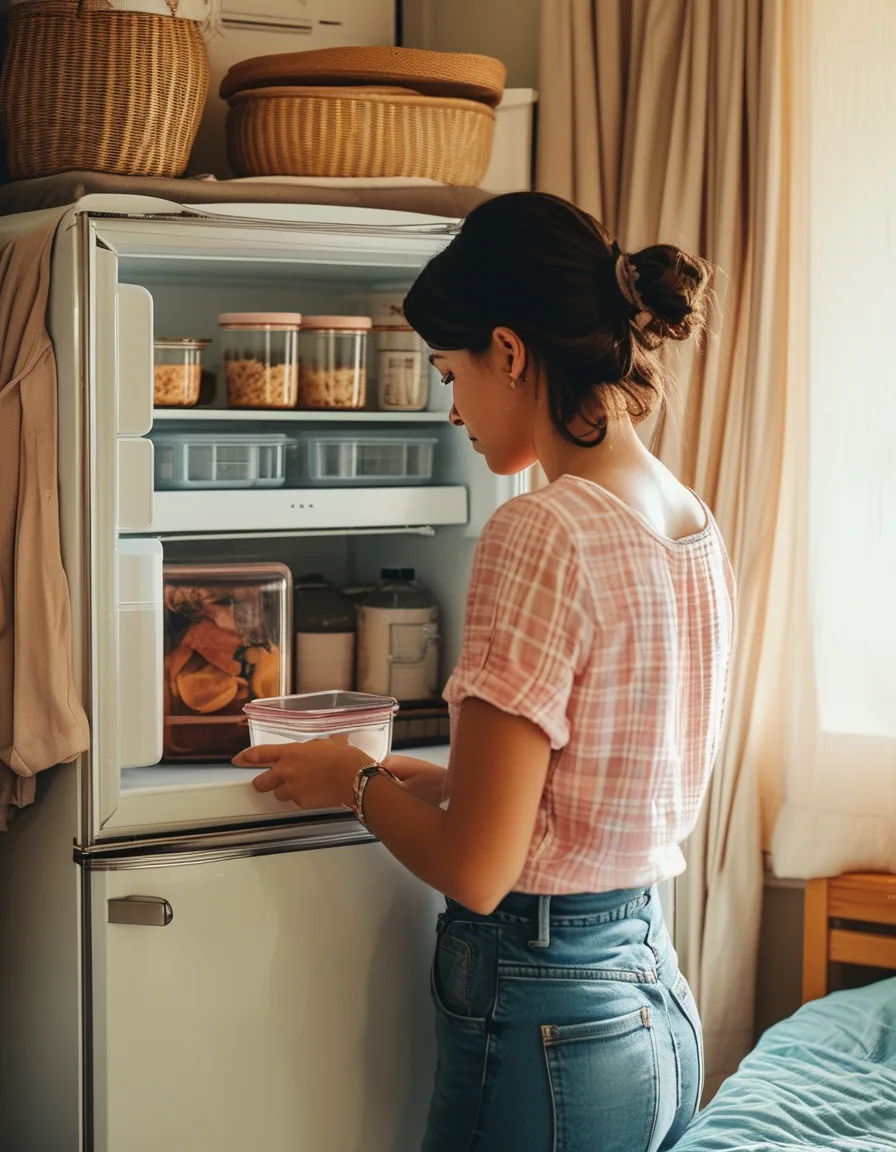
Back and bottom = coldest, most stable. That’s where dairy, meat, and anything that spoils fast belongs.
Door = warmest. Reserve it for things that are shelf-stable anyway — condiments, hot sauce, jam — nothing that actually needs to stay cold.
Top shelf runs slightly warmer than the bottom in most compressor fridges, so it’s the right spot for drinks and produce that doesn’t need peak cold.
5 Mistakes That Speed Up Spoilage in a Dorm Fridge
1. Never checking the actual temperature. Most mini-fridge dials are unlabeled guesses. A $6 fridge thermometer removes the guessing — target 37-40°F.
2. Overpacking it. Airflow matters. A fridge packed solid can’t circulate cold air evenly, creating warm pockets even at a correct thermostat setting.
3. Leaving the door open while deciding what to eat. Every extra second raises the internal temp measurably in a small space.
4. Storing milk in the door. Classic mistake — move it to the back immediately.
5. Ignoring the drip tray or back panel. Dust buildup on the back coils reduces cooling efficiency over a semester.
What actually extends shelf life in a small fridge?
Beyond placement: buy smaller quantities more often rather than a week’s worth at once — a mini-fridge’s inconsistent cold makes long storage riskier regardless of placement.
Use airtight containers instead of original packaging where possible; they hold cold better and reduce cross-contamination smells (which also helps with roommate etiquette).
And don’t skip the freezer compartment — if yours has one, pre-portioning meat there and thawing only what you need cuts spoilage risk dramatically versus keeping raw meat in the main compartment for days.
FAQ: Dorm Mini-Fridge Questions, Answered
What temperature should a mini-fridge actually be set to?
Target 37-40°F (3-4°C) in the main compartment. Use an actual thermometer — the dial numbers on cheap units rarely correspond to real degrees.
Why does my mini-fridge freeze things in the back but stuff in the door goes bad?
That’s the exact temperature gradient described above — back is coldest, door is warmest. It’s normal for a small unit; the fix is rearranging, not a new fridge.
Is it worth getting a fridge thermometer for a dorm fridge?
Yes — it’s a few dollars and removes the single biggest blind spot in mini-fridge food safety.
TL;DR:
- The door is the warmest zone in any fridge — never store dairy or meat there
- Back and bottom shelves stay coldest and most stable
- A cheap thermometer beats guessing at the thermostat dial
- Buy smaller quantities more often; a mini-fridge handles short-term storage better than bulk
Rearrange before you replace — most ‘my mini-fridge is bad’ complaints are really a door-shelf problem.
Keep Reading
This article is for general informational purposes only and is not medical advice. Always consult a qualified health professional for guidance specific to you.