The Dorm Kitchen: Real Food From a Microwave, a Mini-Fridge and Sheer Will
The dorm kitchen is a study in constraints: one microwave, a mini-fridge with opinions, a possibly-contraband kettle, and a meal plan that runs out of appeal by October. Within those constraints lives a genuinely learnable skill — real food, assembled from a dorm, on a student budget — and it matters more than it seems: the eating patterns of these years become the defaults of the next decade, and the 2am vending run is a habit with compound interest. Here is the complete dorm cooking guide: microwave meals that respect you, fridge strategy and the budget math.

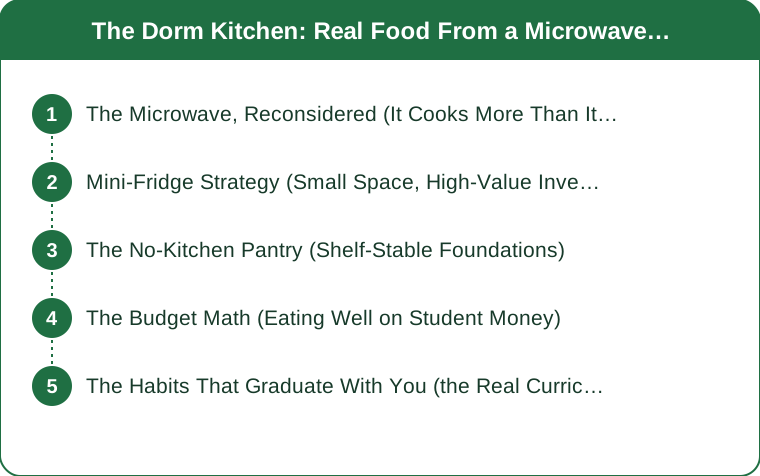
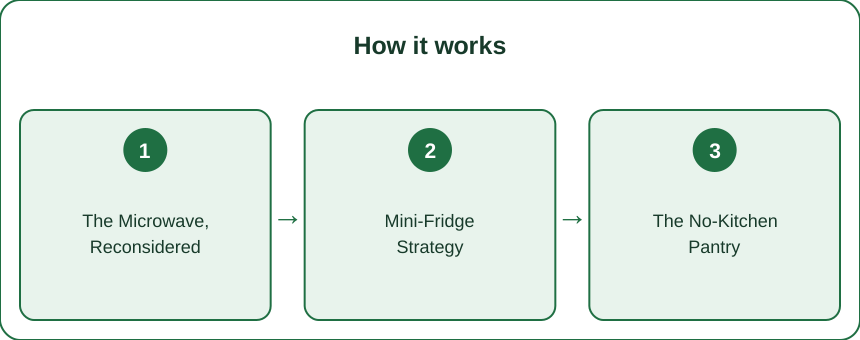
The Microwave, Reconsidered (It Cooks More Than It Reheats)
The appliance upgrade that is entirely mental: microwaves steam, poach and bake — not just reheat — and the technique list rewrites the dorm menu: steamed vegetables (any frozen vegetable plus a splash of water in a covered bowl, 3–4 minutes — restaurant-side-dish quality, zero skill), the microwave baked potato (scrubbed, forked, 8–10 minutes — a complete meal base for under a dollar: top with cheese, beans, salsa, yogurt-as-sour-cream), scrambled eggs and omelets-in-a-mug (eggs, splash of milk, 60–90 seconds in bursts with stirring — legitimate protein breakfast in two minutes), rice and grain pouches (90 seconds to a bowl foundation), poached-adjacent salmon (a fillet, covered, 2–3 minutes — the dorm flex nobody expects), quesadillas (30 seconds, then crisped against the mug-warmed plate if you are fancy), and the famous mug cake for morale. The two universal rules: cover everything (steam is the cooking medium and the splatter defense), and cook in bursts with stirring (microwaves heat unevenly — the middle-is-cold experience is technique, not equipment). The microwave was never the limitation. The recipe file was.
Mini-Fridge Strategy (Small Space, High-Value Inventory)
The refrigeration economics: a mini-fridge rewards dense, versatile, high-protein stocking — the all-star inventory: eggs (the single highest-value dorm food — protein at pennies, a dozen uses), Greek yogurt (breakfast, snack, sour-cream substitute, smoothie base), real cheese (satiety and morale), tortillas (the bread that outlasts bread — quesadillas, wraps, breakfast tacos), pre-washed greens (the salad possibility that fights the beige-food drift), hummus, a condiment bench (hot sauce, soy sauce, everything-bagel seasoning — flavor is what separates food from fuel), and the freezer-shelf priorities: frozen vegetables and frozen berries (the produce that never wilts accusatorially). The management rules: the fridge triage (dense proteins and dairy in the cold body, produce in the door only if eaten fast — mini-fridge doors run warm), the label-and-eat-first discipline (mini-fridges hide leftovers poorly — a Sunday audit prevents the biology experiments), and the roommate treaty (shelf sovereignty negotiated early — the eaten-yogurt cold war has ended friendships). Small fridge, dense value: every slot earns its cold.

The No-Kitchen Pantry (Shelf-Stable Foundations)
The under-bed grocery store: oats (breakfast for a dime — microwave oatmeal with frozen berries and peanut butter is the dorm’s best breakfast-per-dollar), rice and grain pouches, canned beans (the protein-fiber workhorse — rinse and add to literally anything), canned tuna and salmon (the mini-fridge-free protein), peanut butter (calories, protein and morale in one jar), whole-grain crackers and tortillas, instant soup upgrades (the ramen-plus doctrine: a packet of ramen plus a microwave-steamed handful of frozen vegetables plus an egg stirred in hot broth equals actual dinner — the upgrade costs sixty cents and transforms the genre), popcorn kernels in a paper bag (the whole-grain snack at a tenth of bag-popcorn price), and the spice minimum (salt, pepper, garlic powder, cinnamon, hot sauce — five flavors that make repetition survivable). The pantry principle: shelf-stable protein and fiber are the scarce resources in dorm eating — stock them deliberately and the vending machine loses its leverage.
The Budget Math (Eating Well on Student Money)
The financial curriculum: the meal-plan optimization (use the paid-for meals strategically — the dining hall as protein-and-produce base camp, the dorm kitchen for the meals the plan does not cover or the hall does badly; the swipe left unused is money spent on nothing), the cost-per-meal literacy (the dorm-cooked baseline: oatmeal breakfast ~$0.50, egg-and-tortilla lunch ~$1.25, ramen-plus dinner ~$1.50 — versus the $9–14 delivery default: the difference, run across a semester, is a spring-break fund), the grocery strategy for the car-less (the campus-adjacent store run with a friend, the online grocery order split with the floor, frozen-and-canned prioritized for transport weight), the caffeine economics (the dorm coffee setup — even a $20 french press plus grocery beans — versus the daily $6 latte: the single largest recoverable line item in most student budgets), and the honest grace note: the social meals matter (the pizza night is tuition for friendships — budget for it deliberately rather than guiltily, and let the dorm kitchen fund it by handling the ordinary meals). Eating well on student money is not deprivation skill. It is arbitrage: cook the cheap meals, buy the meaningful ones.
The Habits That Graduate With You (the Real Curriculum)
The long-game framing: the dorm years install eating defaults with decade-long momentum — and the transferable skill list is short and learnable: the protein-anchor habit (something substantive at every meal — the eggs, yogurt, beans and tuna rotation — which quietly regulates energy, focus and the late-night snack drift), the frozen-vegetable reflex (the produce habit that survives every kitchen you will ever have), the upgrade instinct (the ramen-plus doctrine generalized: whatever the base, add a protein and a plant — the formula that converts cheap food to real food forever), the cook-once-eat-twice awareness (even dorm cooking batches: the double quesadilla, the two-day oats), and the budget consciousness that treats food money as allocated rather than leaked. None of this requires the dorm to be a hardship posting: the microwave dinner eaten with floormates beats many restaurant meals on every metric that matters at twenty. Learn the constraints now, and every kitchen after this one — the first apartment galley, the eventual real kitchen — feels like an absurd luxury you know exactly how to use. The mini-fridge was the training montage. It just did not look like one.
Dorm cooking, mastered within constraints: the microwave promoted to actual cooking (steam, poach, bake — covered, in bursts), the mini-fridge stocked dense (eggs, yogurt, tortillas, frozen vegetables), the pantry built on protein-and-fiber shelf-stables, the ramen-plus doctrine upgrading everything, and the budget arbitrage funding the social meals that matter. Total equipment: what the dorm allows. Total skill transfer: every kitchen for the rest of your life. Start tonight — the baked potato takes nine minutes, and October-you will thank September-you for learning it.
Keep Reading
This article is for general informational purposes only and is not medical advice. Always consult a qualified health professional for guidance specific to you.